Buyer Guides
Low-Profile Sneakers: What They Are and How to Choose Them
Learn what low-profile sneakers are, how they differ from low-top shoes, and how to choose the right fit, materials and style for everyday wear or a retail collection.
LEFUSHOES · 2026-11-15
Contents
Low-profile sneakers combine a streamlined upper with a relatively restrained sole, making them easy to wear with jeans, relaxed trousers and everyday separates. Choose them by checking toe space, heel security, upper construction and the way the sole feels underfoot. A slim appearance alone does not tell you whether a shoe will be comfortable, durable or suitable for your daily routine.
The renewed interest in slimmer sneakers creates useful choices for shoppers and footwear retailers alike. This guide explains how to interpret the look, compare constructions and build a practical shortlist. It also shows where the LEFUSHOES catalogue can help wholesale buyers explore related casual footwear without assuming that every photographed style has the same materials or fit.
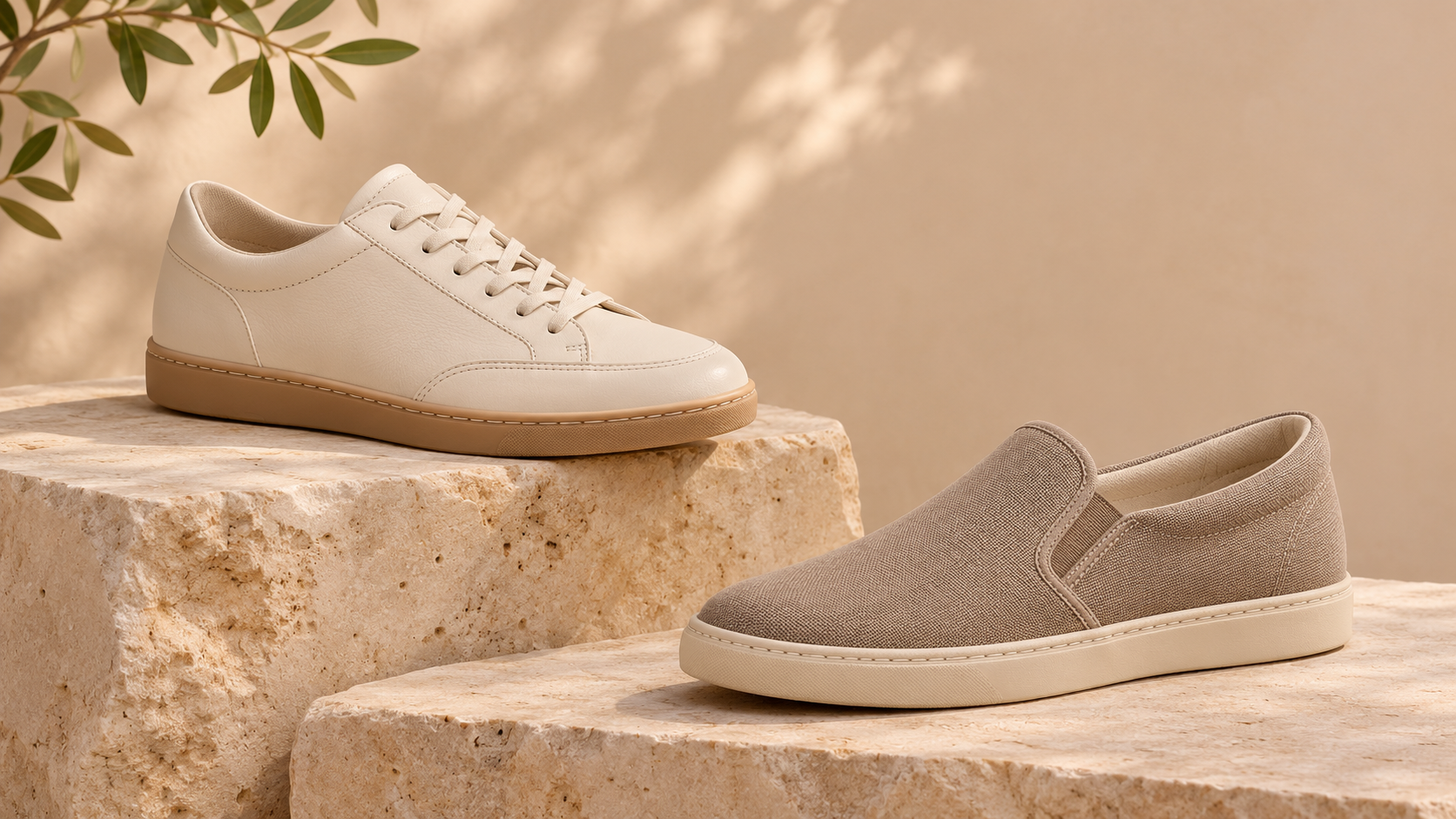
Cover image: AI-generated footwear concept illustration, not a photograph of a specific LEFUSHOES product.
Why Are Low-Profile Sneakers Getting Attention?
Recent autumn and winter 2026 fashion coverage has repeatedly highlighted slimmer sneaker silhouettes. ELLE's low-profile sneaker feature discusses the direction, while DSW's seasonal footwear guide includes retro and low-profile styles. These are editorial and retail signals, rather than proof of a particular Google search volume or a forecast of sales in every market.
The appeal is easy to understand through clothing proportions. A restrained shoe can sit quietly beneath wider trousers, make casual tailoring feel less formal and offer an alternative to a visibly bulky sole. Some versions reference court shoes, some resemble vintage runners, and others simplify the shape into a slip-on. The useful question is which interpretation fits your wardrobe or customer base.
For a retailer, an emerging look is a reason to investigate samples and customer interest. It is not a reason to replace an entire successful assortment. Existing sales, return reasons, climate and price expectations remain more useful buying inputs than a single trend headline.
What Are Low-Profile Sneakers?
Low-profile and low-top describe different things
Low-top describes the height of the collar around the ankle. Low-profile usually describes the overall visual shape, especially a modest sole and less bulky upper. A low-top sneaker can still have a large platform, and a visually slim sneaker can contain more structure than photographs suggest. Treat these words as descriptions rather than technical specifications.
A thin-looking sole does not reveal its full construction
The visible sidewall is only part of the shoe. The footbed, internal layers and outsole design all affect how the finished pair feels. Two shoes with similar side views may differ in weight, stiffness, internal volume and cushioning. Ask for construction details when they matter, and assess the actual pair before deciding.
Minimal styling is not a performance claim
A clean, flexible-looking sneaker is not automatically a barefoot shoe, running shoe or specialist walking shoe. Those descriptions involve separate design considerations. Unless a supplier provides appropriate specifications and evidence, describe the shoe by its visible style and intended casual use. This keeps consumer expectations aligned with the product.
Four Styles Worth Comparing
Clean court-inspired sneakers
Court-inspired styles often use a relatively simple upper and clearly defined sole edge. They can work with denim, chinos and informal office outfits. Look at toe shape, panel placement and how much contrast the sole creates. A bright white sidewall can feel sportier than a tonal one, even when the overall construction is similar.
Retro runners
Retro running-inspired sneakers use paneling, textile areas and contrasting overlays to create a sportier impression. Their heritage appearance does not establish suitability for running. Compare them as casual footwear unless current performance specifications say otherwise. For buying teams, the additional panels also mean more colours, materials and finish combinations to approve.
Simple slip-ons
Slip-ons suit customers who prefer a clean upper and quick entry. Fit deserves particular attention because there are no laces to adjust the instep. Elastic sections, opening shape and heel construction affect retention. A slip-on that looks sleek in a photograph can feel loose at the heel or tight across the top of the foot.
Ballet-influenced hybrids
Some fashion sneakers borrow softer lines and lower openings from ballet footwear. These can suit a more fashion-led collection, but a lower opening changes the fit questions. Check whether the shoe stays secure while walking and whether seams or binding contact the foot uncomfortably. Do not assume this category shares the fit of a conventional lace-up.
How to Choose Low-Profile Sneakers for Everyday Wear
Start with the day you will actually wear them
Think about your usual walking distance, surfaces, weather and dress requirements. A pair for a short commute and indoor work may face different demands from shoes worn through a full sightseeing day. A tidy appearance can satisfy a dress preference, but it does not replace a practical assessment of comfort and conditions.
If you regularly encounter rain, do not infer water resistance from a leather-like appearance. Seams, upper materials, treatments and construction all matter. Likewise, a visible tread pattern does not establish slip resistance. Ask for relevant evidence if either characteristic is essential to the purchase.
Check toe room without losing heel security
Try both shoes with the socks you expect to wear. Stand, walk and change direction. Notice whether your toes feel compressed, your heel moves excessively or the upper presses over the instep. The shoe should feel appropriately secure without relying on painfully tight lacing. A larger size is not always a solution to a shape mismatch.
Compare the fit while standing as well as sitting. Check the widest part of the forefoot and the height available above the toes. A pointed visual shape may extend beyond the usable toe space, while a rounded shape can still be too shallow. Marked size alone cannot resolve these differences.
Evaluate the whole shoe underfoot
Walk on a clean surface where the seller permits it. Pay attention to pressure points, stability and how the shoe bends during normal movement. A soft first impression does not guarantee sustained comfort, and a firmer feel is not automatically unsuitable. Individual preference and the complete construction matter more than a single feature label.
Read the return conditions before outdoor wear
Online shoppers should check the seller's size guidance and return policy before purchasing. Keep packaging and try the shoes indoors first if that is required for returns. When comparing reviews, look for comments about the exact model and similar fit needs rather than treating a brand's overall reputation as a sizing rule.
Materials: What to Ask Beyond the Product Photo
Upper appearance provides clues, but it is not a reliable material declaration. Smooth leather, coated materials and synthetic alternatives can look similar in small images. Request the stated upper, lining and outsole materials, then consider care needs and intended use together.
Smooth uppers
Smooth finishes can support a neat, versatile look. Their cleaning requirements depend on the material and finish. Ask whether the surface is genuine leather, a coated textile or another synthetic construction. Avoid choosing a cleaning method from appearance alone, especially where light colours or contrasting panels are involved.
Suede and textured finishes
Textured surfaces introduce depth to neutral colourways and can soften the look of casual tailoring. They also make care instructions more important. Confirm whether the material is suede, another leather finish or a synthetic alternative. Use the maker's recommended care approach and test compatible products discreetly before broader application.
Mesh and other textiles
Textiles can change both appearance and feel, but an open-looking outer layer does not describe the complete ventilation of the shoe. Linings, padding and internal construction also matter. For retailers, inspect colour consistency, edge finishing and how different materials meet around the toe, eyestay and heel.
Looking for styles to compare? Browse the LEFUSHOES footwear catalogue and shortlist the shapes that suit your market. The website includes P120 under low-profile sneakers and P106 as a retro running-inspired option. Use those references to start a conversation, then confirm the current material specification, size range and sample availability for each selected style.
How to Style Low-Profile Sneakers
With straight-leg jeans
Straight-leg denim is a straightforward starting point because the hem leaves enough of the shoe visible to show its shape. Try a length that does not bunch heavily over the toe. Cream, white or understated neutral shoes can keep the outfit simple; a contrasting colour can become the focal point when the rest of the clothing is restrained.
With wide-leg trousers
A slim shoe can work beneath wider trousers, but hem length matters. If the fabric drags or hides the entire shoe, adjust the length rather than assuming a different sneaker will solve the proportion. View the outfit while walking, not only in a stationary mirror pose. The hem should clear the ground during ordinary movement.
With casual tailoring
Simple uppers and restrained colour combinations can complement relaxed tailoring where the dress code allows sneakers. Consider the finish of the whole outfit: clean footwear, a tidy trouser hem and coordinated colours usually matter more than a trend label. Very sporty paneling may create a stronger contrast than a plain court-inspired design.
With skirts and dresses
Low-profile sneakers can make dresses and skirts feel more casual. Try the outfit with the socks you intend to use, because sock height changes the visual break above the shoe. A tonal sock creates a different effect from a deliberately contrasting one. Choose the combination that fits the setting rather than assuming one styling formula suits every wearer.
Build colour around existing clothes
Before buying a seasonal colour, identify several outfits it will work with. Neutral shades often make that exercise easier, while a richer accent can refresh a familiar wardrobe. For stores, present the shoe alongside realistic outfit ideas so customers can understand its role without needing to recreate an entire editorial look.
Care Habits That Help Preserve the Appearance
Follow the care guidance supplied for the exact materials. Remove loose surface dirt gently before using a compatible cleaner, and avoid soaking a shoe unless its instructions expressly allow that method. Machine washing can affect components and finishes; do not assume it is appropriate because the upper contains fabric.
Allow damp footwear to dry naturally away from direct heat. Remove removable insoles only where the construction permits it. Store clean, dry shoes where they are protected from crushing, and avoid leaving them damp inside sealed packaging. For mixed-material shoes, follow the requirements of the most sensitive part rather than treating the entire upper as one surface.
Retailers can reduce avoidable dissatisfaction by providing accurate material and care information before purchase. A short care note that matches the product is more useful than a generic promise of easy maintenance. If a finish requires particular treatment, make that visible on the product page.
What Retailers Should Check Before Ordering
Define a customer and a use case
Write down who will wear the shoe, where it will be sold and what role it plays in the collection. A fashion boutique, a general footwear store and an online casualwear brand may all interpret the same trend differently. This brief helps prevent a sample from being approved simply because it photographs well.
Compare samples consistently
Use a simple review sheet covering fit, upper materials, lining, sole construction, appearance, packaging and care information. Record the model reference, sample size and review date. Photograph the approved sample from several angles and identify any requested changes clearly. These records make later discussions more precise.
Factory testing and shipment inspection should follow the agreed product requirements. Specify which characteristics need verification and what evidence is expected. A visual check cannot establish every performance property. Where a particular claim matters to your market, discuss the relevant testing and documentation before using it in advertising.
Plan quantities from customer evidence
Use sales history, preorders and return feedback to build the proposed size and colour distribution. A popular image does not show which sizes will sell. Keep experimental colours proportionate to the evidence available, and confirm whether repeat orders are feasible before depending on rapid replenishment.
Make the inquiry specific
LEFUSHOES presents sneakers, casual shoes, loafers and ankle boots on its website, allowing buyers to compare related directions in one catalogue. For a useful inquiry, send the selected references, target country, expected quantities, size range and packaging requirements. Ask which branding options are available for the exact style rather than assuming all models support identical customization.
Send your requirements to LEFUSHOES to discuss a shortlist and request current product details. Including a reference photo or catalogue code makes the conversation more useful than a broad request for “trending sneakers.”
Frequently Asked Questions
Are low-profile sneakers the same as barefoot shoes?
No. Low-profile is generally a visual description. It does not establish toe-box shape, heel-to-toe geometry, flexibility or other design characteristics associated with barefoot footwear. Check the actual specifications instead of relying on the name.
Are they comfortable for all-day walking?
That depends on the model, fit, wearer and activity. A slim sole alone cannot answer the question. Try the exact pair, consider the intended conditions and choose footwear that feels suitable for your needs.
Should I size up in slim sneakers?
Not automatically. Follow the model's sizing guidance and assess width, instep space and heel retention. If the shape does not suit your foot, increasing length may create a loose heel without resolving the original problem.
Can I wear them in winter?
They may suit mild, dry conditions and indoor settings, depending on the construction. Do not assume insulation, water resistance or grip on ice. Choose footwear designed for the conditions you will encounter.
Which LEFUSHOES styles should buyers explore?
The catalogue lists P120 among low-profile sneakers and P106 as a retro running-inspired style. These are starting points for comparison, not interchangeable products. Confirm current specifications and inspect samples before approving an order.
Can retailers request private-label options?
The LEFUSHOES website invites private-label inquiries. Availability should be confirmed for the selected model, including logo placement, packaging, quantities and timing. Send an artwork brief and product references to make the discussion specific.
Choose the Shape, Then Verify the Shoe
Low-profile sneakers offer a useful way to bring a cleaner proportion into everyday outfits and casual footwear collections. Start with the silhouette you like, then check fit, materials, construction and care requirements. For retailers, connect the trend to actual customers and a documented sample review before committing to quantities.
Building your next casual footwear collection? Explore LEFUSHOES styles, save your preferred references and request product details or a quotation. Share your market, size range and quantity estimate so the discussion can focus on footwear that fits your business.
Editorial research reviewed November 15, 2026. Trend references describe current editorial coverage; they are not search-volume measurements. Product specifications and availability require confirmation.